
Last Updated: November 19, 2026
Quick Summary
Nickel free jewelry for sensitive skin is made without nickel in the metal or plating, so it is far less likely to trigger the red, itchy rash many kids and teens get from cheap earrings. Stainless steel and implant-grade titanium are strong low-risk choices, while plated and alloy pieces are where most reactions start.
- Nickel free is not a regulated label, so any seller can print it on a tag.
- Stainless steel resists tarnish and rust and suits daily wear for active kids.
- Plated and alloy jewelry is where most reactions start as coatings wear thin.
- The earring post touches skin longest, so it must be stainless steel, titanium, or niobium.
- Nickel-containing backings can cause a reaction even when the earring itself is fine.
Table of Contents
- Why Nickel Free Jewelry Matters for Sensitive Skin
- Hypoallergenic Jewelry Metals: A Full Comparison
- How to Test Jewelry for Nickel Before You Buy
- Nickel Free Earrings for Sensitive Ears: What to Check
- Reducing Irritation and Allergic Reactions Day to Day
- Frequently Asked Questions
Why Nickel Free Jewelry Matters for Sensitive Skin
Nickel free jewelry for sensitive skin is made without nickel in the metal or plating, so it is far less likely to trigger the red, itchy rash many kids and teens get from cheap earrings. A daughter wears new earrings to school, and by dinner her earlobes are red and stinging. The culprit is usually nickel, a cheap metal used in alloys and budget plating and one of the most common causes of contact dermatitis, which the American Academy of Dermatology describes as an itchy rash appearing where skin meets metal. "Nickel free" is not a regulated label, so any seller can print it on a tag; the material behind the claim is what protects your child's skin.
Hypoallergenic Jewelry Metals: A Full Comparison
Plated and alloy pieces sit at the bottom of this list because their coating wears through, exposing the metal underneath.
| Metal | Nickel Risk | Durability | Best For |
|---|---|---|---|
| Stainless steel | Very low | High, resists tarnish and rust | Daily wear, active kids |
| Implant-grade titanium | Very low | High, very lightweight | Sensitive ears, new piercings |
| Plated jewelry | High once coating wears | Low | Not for sensitive skin |
Stainless steel is a strong choice for kids and teens: it holds its shine, resists rust, and stands up to pool water and sweat, though it is heavier than titanium. Plated and alloy jewelry is where most reactions start: brass and zinc bases tarnish fast, and gold plating wears thin within weeks. Cleaning matters too, especially for steel; the Clarajoy and Co. jewelry care page covers how to keep pieces bright, with how to clean stainless steel jewelry as a starting point.
How to Test Jewelry for Nickel Before You Buy
You cannot fully test a piece for nickel at home, but you can verify a seller's claim before you spend money. Ask what the base metal is, not just the finish; "stainless steel" or "implant-grade titanium" is checkable, while "hypoallergenic" alone is not. Sizing trips up more parents than metal choice does; kids grow, and an ill-fitting clasp rubs and irritates. Clarajoy and Co. has a size guide and offers pieces thoughtfully sized for growing girls, so you can shop the collection for stainless steel pieces built for active wear.
Nickel Free Earrings for Sensitive Ears: What to Check
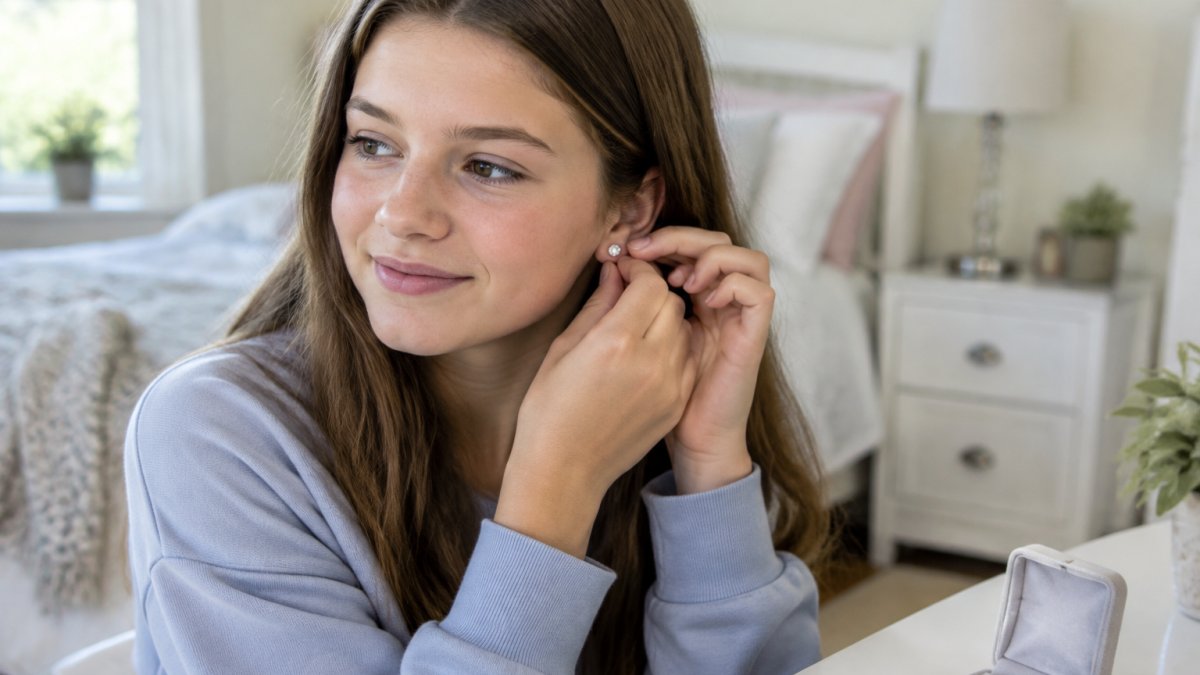
Earrings for sensitive ears come down to three parts: the post, the backing, and any decorative coating. The post touches skin longest, so it must be stainless steel, titanium, or niobium, not a plated alloy. Backings matter more than most parents expect; nickel-containing backs sit against the earlobe all day and can cause a reaction even when the earring itself is fine, so look for steel or surgical-grade backs. For everyday style, stainless steel studs and small hoops hold up to gym class, swimming, and recess without tarnishing.
Reducing Irritation and Allergic Reactions Day to Day
Reducing irritation starts with what touches the skin and how often it is cleaned; even safe metals can trap sweat, lotion, and pool water against the skin. If your child has a known metal allergy, mention it to their doctor before a new piercing, and ask about patch testing.
Shopping for a kid with sensitive skin should not mean guessing. At Clarajoy and Co., we build our pieces from durable stainless steel so they resist tarnish and stay gentle through school days and sports practices. Our jewelry is thoughtfully sized for growing girls, and every piece is designed for everyday wear. Start with our jewelry care guide to keep pieces shining, then find her size and pick a style she will actually wear.
Frequently Asked Questions
What jewelry is safe for people with nickel allergies?
Stainless steel, implant-grade titanium, niobium, and solid gold (14K or 18K) are the metals most often recommended for nickel allergies. Plated jewelry is riskier because the coating can wear through and expose the base metal underneath. At Clarajoy and Co., pieces are made from durable, tarnish-resistant stainless steel designed to be gentle on skin.
How can I tell if my jewelry contains nickel?
A nickel test kit uses a chemical solution that changes color when it touches nickel, and it works on earring posts, clasps, and chain links. At home, watch for red, itchy patches or a green mark on skin after wearing a piece. If a label says nickel free, ask the seller which base metal and coating are used, since plated jewelry can still hide nickel underneath.
Is stainless steel jewelry always nickel-free?
Not always. Most stainless steel contains a small amount of nickel bound into the alloy, but the better grades release very little, which is why many sensitive-skin wearers tolerate it well. If you have a diagnosed nickel allergy, ask the seller for the specific grade and whether the piece has a coating. Clarajoy and Co. uses stainless steel chosen for durability and gentle wear on kids' skin.
